Strategy
5 hour SEO plan, beginner SEO strategy, build website authority, founder marketing strategy, how to improve rankings fast, internal linking strategy, practical SEO plan, search intent optimisation, SEO for founders, SEO for SaaS founders, SEO for small businesses, SEO for solo entrepreneurs, SEO for startups, SEO with limited time, simple SEO strategy, small business SEO tips, startup marketing SEO, startup SEO checklist, technical SEO basics
SEO Checker
0 Comments
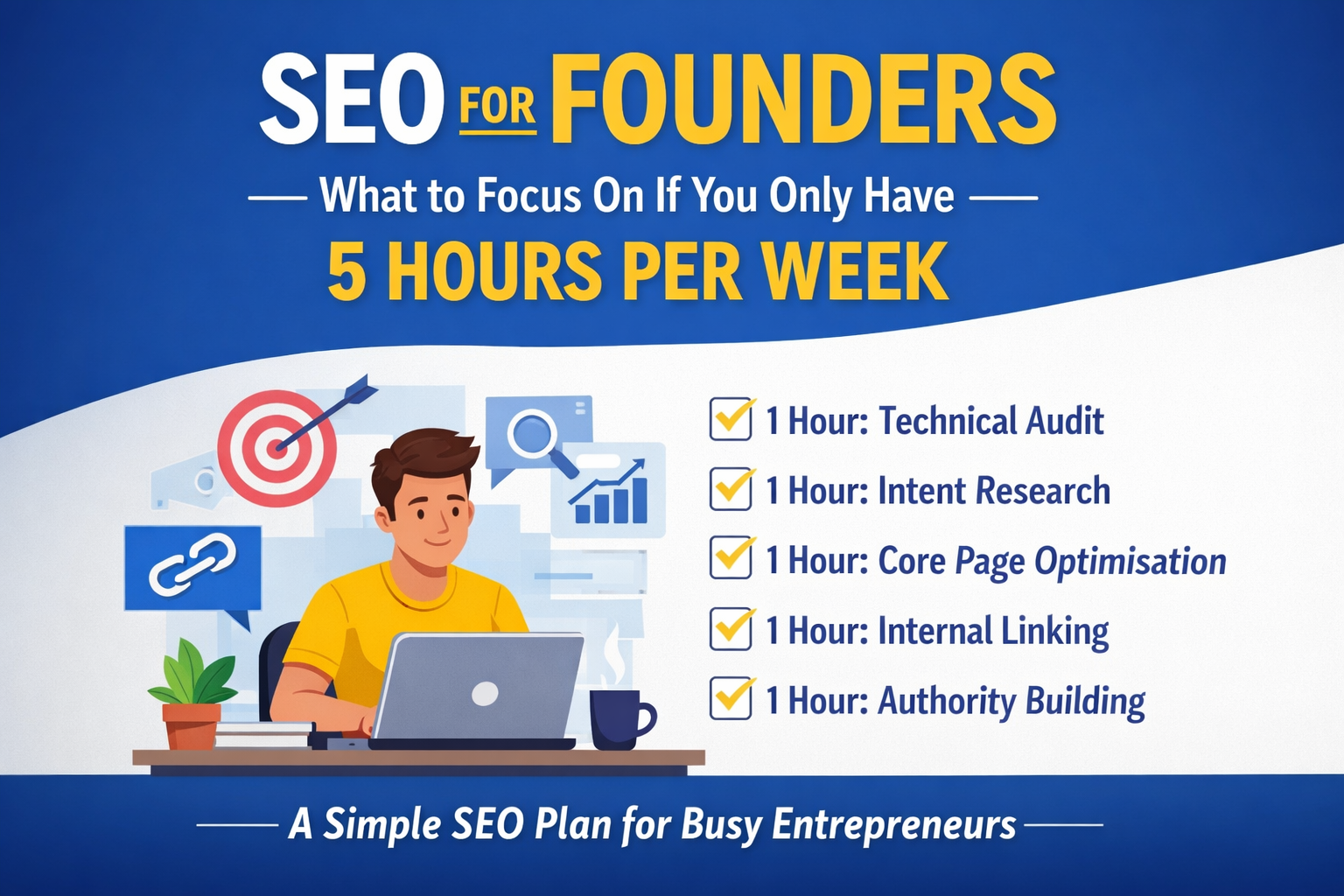
SEO for Founders: What to Focus On If You Only Have 5 Hours Per Week
If you’re a SaaS founder, solo builder, or running a side project, you don’t have 40 hours a week for SEO.
You have product to ship.
Customers to support.
Features to refine.
Revenue to grow.
So SEO either becomes overwhelming… or ignored entirely.
The truth is, you don’t need endless optimisation sessions to see progress.
If you only have 5 hours per week, you can still build meaningful search traction — but only if you focus on the right things.
This is a simple, practical SEO strategy for founders with limited time.
First: Accept This Reality
SEO for startups is not about doing everything.
It’s about:
- Removing blockers
- Improving one important asset at a time
- Building authority gradually
- Staying consistent
Small, compounding improvements beat occasional deep dives.
Here’s how to structure your weekly 5 hours.
Hour 1 – Technical Health Check
Before writing new content or chasing links, confirm your site isn’t silently blocking growth.
Many startup websites lose months because of small technical issues:
- Missing meta titles
- Slow page speed
- Broken internal links
- Indexing problems
- Redirect errors
- Weak mobile performance
You don’t need to manually audit everything.
Run your site through the Site Academy SEO Checker and review the highest-impact issues first.
The goal of Hour 1 is simple:
Ensure nothing obvious is holding rankings back.
Fix one or two major issues per week — not everything at once.
Hour 2 – Intent Research (Not Keyword Stuffing)
Most founders target keywords.
Fewer founders target intent.
Instead of asking:
“What keywords should I rank for?”
Ask:
“What problem is my ideal user searching to solve?”
For example:
A SaaS tool for analytics shouldn’t just target:
- analytics software
It should target:
- how to track website performance
- how to measure user engagement
- why bounce rate matters
Intent-focused content converts better and ranks more easily.
Spend this hour identifying:
- One high-value question your audience is asking
- The type of page that satisfies it best
Keep it focused.
Hour 3 – Improve One Core Page
Do not publish five average articles.
Improve one important page.
Choose either:
- Your homepage
- A core landing page
- A high-potential blog article
Strengthen it by:
- Clarifying the headline
- Matching search intent better
- Improving structure (clear H2s and sections)
- Adding examples or depth
- Improving internal links
Founders often create content quickly and never revisit it.
Small refinements each week compound massively over time.
Hour 4 – Strengthen Internal Linking
Internal linking is one of the most underrated SEO levers — especially for small websites.
Every time you publish a new page, ask:
- Which existing pages should link to this?
- Which new links can this page send to strengthen others?
Strong internal linking:
- Helps Google understand your topic focus
- Distributes authority across your site
- Improves crawl efficiency
- Increases time on site
This is a 60-minute task that can influence rankings more than publishing another new post.
Small sites benefit enormously from structured linking because they don’t have massive backlink profiles yet.
Hour 5 – Authority Building
Technical health prepares your site.
Authority helps it compete.
This doesn’t mean spamming directories or buying low-quality links.
Use this hour to:
- Reach out for one relevant mention
- Contribute one useful comment on an industry forum
- Publish a thoughtful LinkedIn post
- Share your content in a relevant community
- Build one real relationship
Authority compounds slowly — but even small weekly efforts add up.
SEO for small businesses often fails here because founders ignore authority entirely.
Even modest external signals dramatically accelerate growth once your foundations are strong.
What This 5-Hour Framework Actually Achieves
If you repeat this weekly structure for 3–6 months, you’ll:
- Eliminate technical blockers
- Build topic clarity
- Strengthen core pages
- Improve crawl flow
- Increase authority signals
- Develop consistent SEO momentum
This is how small startups begin competing with larger players — through disciplined execution rather than scale.
What You Don’t Need to Do (Yet)
You don’t need:
- 100 blog posts
- Perfect Core Web Vitals
- Dozens of backlinks immediately
- Expensive SEO tools
- Complex technical overhauls
You need consistency and prioritisation.
The biggest mistake founders make is trying to “finish SEO” in a weekend.
SEO isn’t a sprint. It’s structured iteration.
Why This Strategy Works for Founders
SaaS founders and solo builders operate under constraints.
Time is the rarest resource.
This approach works because it:
- Keeps tasks manageable
- Forces prioritisation
- Focuses on high-impact actions
- Builds compounding progress
It turns SEO from a vague marketing activity into a controlled weekly process.
Where Site Academy Fits In
When you only have 5 hours per week, you cannot waste time guessing.
Using the Site Academy SEO Checker, you can:
- Instantly see critical technical issues
- Identify optimisation gaps
- Avoid low-impact busywork
- Focus on the changes that actually move rankings
It becomes your weekly diagnostic tool.
Instead of asking “What should I do this week?”
You get clarity immediately.
The Bigger Picture
SEO for startups, side projects, and small businesses doesn’t require massive budgets.
It requires:
- Focus
- Relevance
- Consistency
- Gradual authority
Five hours per week is enough — if those hours are spent on the right tasks.
And when you stack those focused weeks together, search growth stops feeling random and starts becoming predictable.
Share this content:


Post Comment