Strategy
building a free SEO tool, common SEO mistakes on websites, free SEO checker, free website seo checker, on-page SEO checker, practical SEO tool for business owners, SEO audit tool for beginners, SEO audit tool for small websites, SEO checker for small websites, SEO lessons from building a tool, SEO scanner for small business websites, SEO tool for founders, SEO tool for small business, SEO tool insights, small business SEO checker, small website SEO tool, technical SEO checker, website SEO audit tool, website SEO checker free, what I learned building an SEO tool
SEO Checker
0 Comments
What I’ve Learned So Far Building a Free SEO Checker for Small Websites
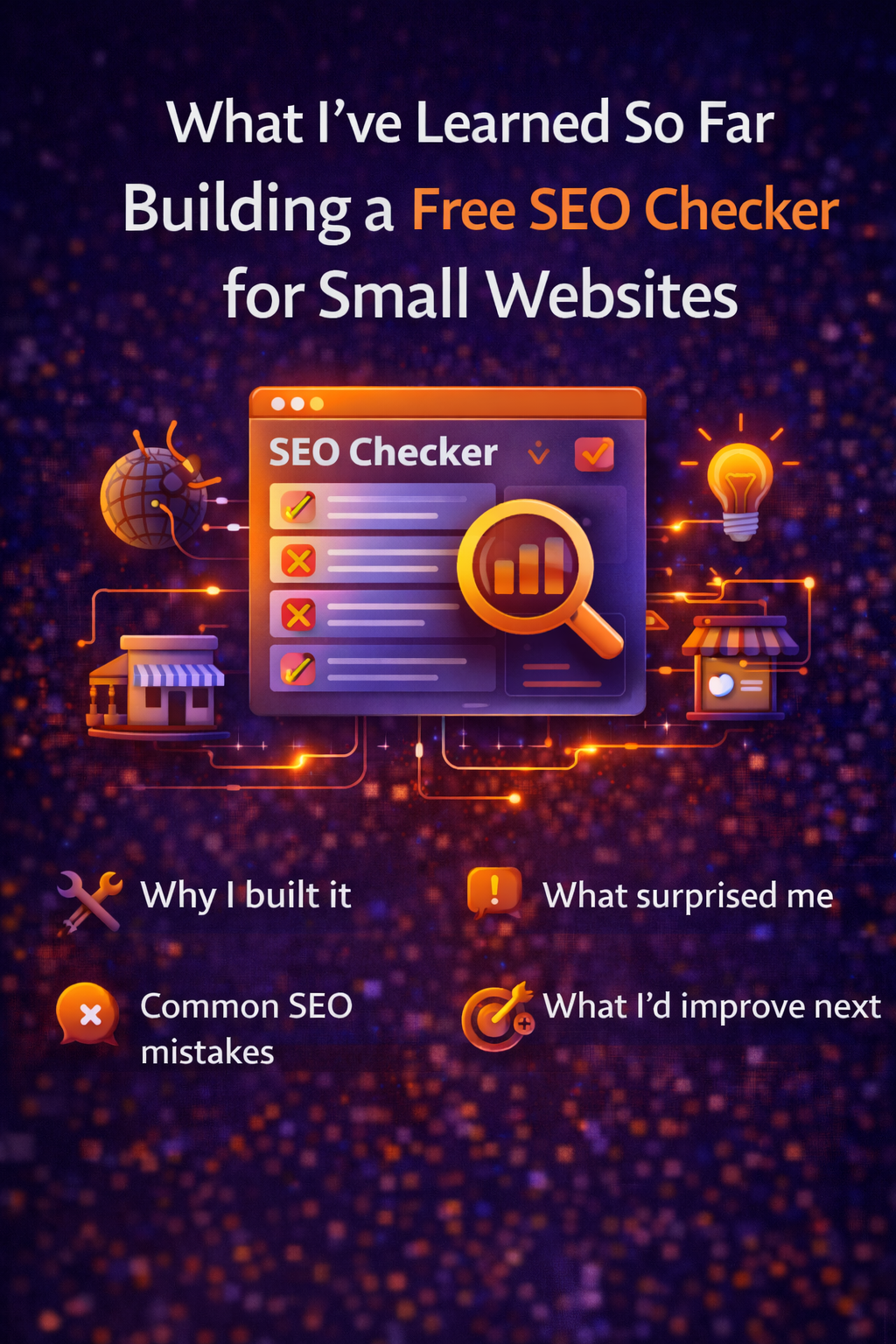
Building a tool sounds simple when the idea first appears in your head.
In reality, it becomes a constant cycle of building, testing, refining, rethinking, and discovering that users care about things you didn’t expect.
That has definitely been true while building Site Academy, a free SEO checker designed to help small websites quickly spot technical, on-page, and trust-related issues.
What started as a useful tool idea quickly turned into something much more valuable: a way to understand how small businesses actually approach SEO, what they overlook, and what really matters when it comes to getting better results online.
This article is a genuine reflection on what I’ve learned so far — what surprised me, what users seem to care about most, the issues I keep seeing again and again, and what I’d improve next.
Why I Built Site Academy in the First Place
Like a lot of SEO tools, Site Academy started from frustration.
There are already big SEO platforms out there. Some are excellent. But for many small businesses, freelancers, founders, and side project owners, they can feel:
- too expensive
- too complex
- too broad
- too focused on data instead of action
A lot of website owners don’t need a huge dashboard with hundreds of metrics.
They need a simple answer to a much more practical question:
“What’s actually wrong with my website right now?”
That was the gap I wanted to solve.
The goal behind Site Academy was never to compete with enterprise SEO platforms on volume. It was to create something that helps smaller websites quickly identify:
- technical issues
- on-page weaknesses
- trust gaps
- indexing blockers
- missed optimisation opportunities
In other words, make SEO feel less overwhelming and more useful.
The First Big Realisation: Most Small Websites Don’t Have a Traffic Problem First
This has probably been the biggest lesson.
A lot of people think the problem is traffic.
They assume:
- “I need more visitors”
- “I need backlinks”
- “I need to post more”
- “I need ads”
But after looking at more websites, I’ve realised many smaller sites don’t have a traffic problem first.
They have a foundation problem.
That usually shows up as:
- weak or missing page titles
- poor meta descriptions
- unclear homepage targeting
- no sitemap
- missing structured data
- weak internal linking
- pages that don’t match search intent
- poor trust signals
More traffic doesn’t fix those things.
It just sends more people into a weak experience.
That changed how I think about SEO.
What Surprised Me Most
When you build a tool, you assume users will care about the things you care about.
That’s not always true.
One of the biggest surprises has been that many people are not looking for “advanced SEO insights” first.
They’re looking for clarity.
They want to know:
- what’s broken
- what matters
- what should be fixed first
- what can safely wait
That’s a very different mindset from traditional SEO tooling.
Many users don’t want a giant list of 100 warnings. They want:
- the important issues
- in plain English
- with enough context to understand why they matter
That’s shaped how I think about the tool and the content around it.
It’s also one of the reasons the blog side of Site Academy has become so important.
What People Actually Care About Most
This was another useful lesson.
People do care about SEO, but not always in the way SEO professionals expect.
The average small business owner or founder usually cares most about:
- whether their pages can be found
- whether their titles and descriptions look right
- whether Google is missing obvious signals
- whether their site looks trustworthy
- whether they’re making avoidable mistakes
- whether they’re wasting time on the wrong things
That’s why practical issues tend to resonate most.
For example, content around:
- page titles
- structured data
- sitemaps
- Open Graph tags
- X / Twitter card tags
- homepage ranking problems
- search intent
- website trust signals
…often feels more useful than abstract SEO theory.
People want things they can understand and act on quickly.
That’s a good reminder for anyone building tools: clarity often beats complexity.
The Most Common SEO Mistakes I Keep Seeing
This has been one of the most valuable parts of building Site Academy.
Patterns emerge quickly.
And the same problems appear far more often than you’d think.
1. Weak or Missing Page Titles
A surprising number of websites still have:
- vague titles
- duplicated titles
- titles that are too short
- titles that are too long
- titles that don’t target the page properly
This matters because the title is one of the clearest signals for both search engines and users.
2. Homepage Over-Optimisation or Misalignment
Many site owners try to make the homepage rank for everything.
That usually creates pages that are:
- too broad
- unclear
- not aligned with real search intent
Often, internal pages should carry the ranking load for specific topics.
3. Missing Technical Basics
This includes things like:
- no sitemap
- missing structured data
- weak canonical handling
- missing social metadata
- no language declaration
- broken or incomplete crawl signals
These are often simple to fix but easy to miss.
4. Internal Linking Is Often an Afterthought
Many sites publish content without properly connecting pages together.
That leads to:
- weak topic clusters
- orphaned opportunities
- poor authority distribution
Internal linking is one of the most underused SEO wins for smaller sites.
5. Promotion Starts Too Early
This is a huge one.
A lot of businesses start:
- running ads
- pushing social traffic
- asking for backlinks
- trying to “scale”
…before the website is actually ready.
If the pages are weak, unclear, or untrustworthy, traffic just exposes the problem faster.
One Lesson That Changed How I Think About SEO Tools
I’ve become much more convinced that many SEO tools unintentionally overwhelm the exact people who need help most.
When someone is new to SEO, they don’t need:
- dozens of competing metrics
- endless audit noise
- issues with no context
- a flood of technical jargon
They need:
- prioritisation
- explanation
- confidence
That’s why I increasingly think the best tools for small websites are not the ones that say the most.
They’re the ones that help people make the next right fix.
That’s something I’d like Site Academy to keep improving.
What I’d Improve Next
Building a tool teaches you quickly that version one is never the real version.
There’s always more to improve.
Some of the things I’d like to continue refining are:
1. Better Prioritisation
Not all SEO issues matter equally.
A site owner should be able to quickly see:
- what is urgent
- what is important
- what is useful but lower priority
That would make the tool feel even more actionable.
2. Stronger Plain-English Guidance
The more I build, the more I believe in simple explanations.
Instead of just flagging an issue, I want the tool to make it obvious:
- why it matters
- what impact it has
- what a good fix looks like
That’s especially important for non-technical users.
3. More Trust and Conversion Signals
A lot of websites don’t fail because of pure SEO.
They fail because they:
- look weak
- feel unclear
- don’t build confidence
- don’t convert
That’s why trust signals, clarity, and conversion structure are becoming more important in how I think about site audits.
4. Better Guidance for “What to Do Next”
Many tools stop at diagnosis.
I’d like Site Academy to keep improving at the next stage:
- what should be fixed first
- what should be ignored for now
- what would likely move the needle fastest
That’s where real usefulness lives.
Building the Blog Changed the Product Too
One thing I didn’t fully expect is how much the blog has influenced the product.
Writing articles around:
- homepage SEO
- search intent
- trust signals
- structured data
- blogging consistency
- growth channels
- content repurposing
…has made the tool better.
Why?
Because writing forces clarity.
It forces you to explain what matters, why it matters, and how it fits into the bigger picture.
That process has helped sharpen what Site Academy should be.
Not just a scanner.
A practical resource for smaller websites that want to grow properly.
What This Reinforced for Me
If I had to sum it up simply, it would be this:
Most small websites do not need more complexity. They need better foundations.
That applies to:
- SEO
- content
- trust
- conversion
- promotion
The internet is full of advice that makes growth sound more complicated than it needs to be.
In many cases, the real wins come from fixing obvious gaps:
- better titles
- clearer page intent
- stronger internal linking
- proper indexing signals
- more trust on the page
- better content structure
That’s the kind of progress that compounds.
Building in Public Is Actually Useful
There’s also something else worth saying.
Sharing what you’re learning while building is valuable.
Not because it “looks good” or because it fits startup culture.
Because it forces honesty.
When you talk openly about:
- what’s working
- what users care about
- what surprised you
- what you got wrong
…you get better faster.
That’s part of why posts like this matter.
Not just for promotion.
For clarity.
Where Site Academy Is Heading
The direction is becoming clearer.
Site Academy is not trying to be everything.
It’s becoming more focused around helping small websites:
- spot important issues quickly
- understand what matters most
- avoid wasting time on low-impact SEO noise
- improve their foundations before scaling promotion
That feels like the right direction.
Because for many smaller businesses, better SEO doesn’t start with more tools.
It starts with better decisions.
If You’re Building Something, This Is Probably Relevant Too
If you’re building a product, a tool, a service, or even just trying to grow a website, one lesson applies across all of it:
People rarely want more information.
They want:
- better direction
- clearer priorities
- fewer blind spots
- more confidence in what to do next
That’s true in SEO.
And honestly, it’s true in most areas of business too.
Building Site Academy has reinforced that again and again.
And that’s probably been the most useful lesson of all.
Share this content:

Post Comment