Strategy
benefits of consistent blogging, blog content SEO tips, blog posting schedule SEO, blogging benefits SEO, blogging for SEO strategy, blogging frequency SEO, consistent blogging SEO benefits, content marketing for SEO, how often to blog for SEO, improve SEO with blogging, increase organic traffic blogging, internal linking SEO strategy, long term SEO strategy blogging, SEO blog strategy, SEO content publishing strategy, seo content strategy, topical authority seo, website blog strategy, why blogging helps SEO
SEO Checker
0 Comments
The Hidden SEO Benefit of Blogging Consistently
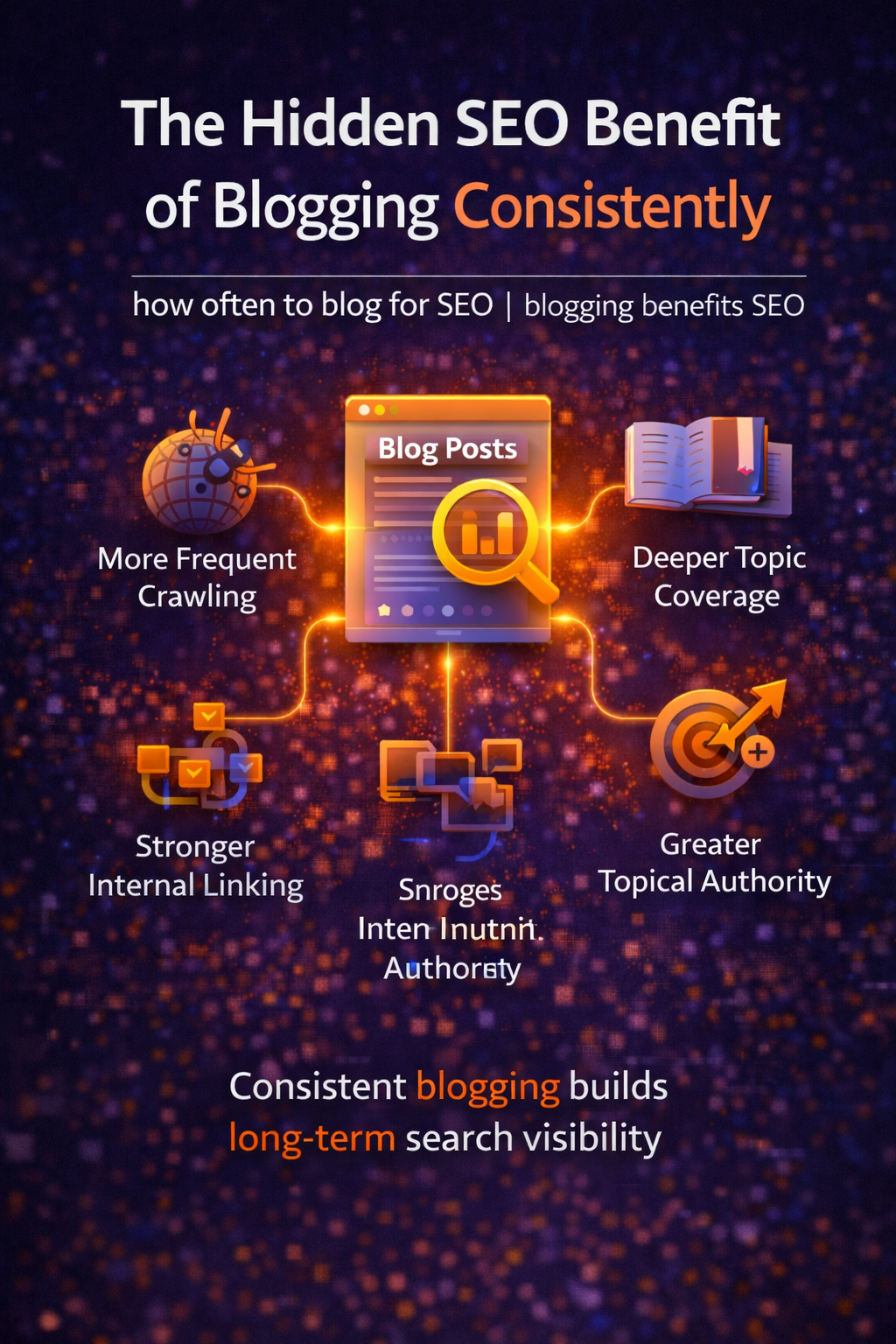
Many businesses start a blog because they’ve heard it helps with SEO.
They publish a few articles, wait for traffic to increase, and then eventually stop when results don’t appear immediately.
The reality is that blogging helps SEO in ways that are often misunderstood. The biggest benefit is not a single article ranking well — it’s the long-term effect of consistent publishing.
Search engines learn more about your website, your expertise becomes clearer, and your internal structure becomes stronger over time.
If you’ve ever wondered how often to blog for SEO, the answer isn’t simply about quantity. It’s about building momentum.
Below are several hidden ways that blogging consistently improves your search visibility.
Why Consistency Matters More Than Volume
Publishing one large article every few months rarely has the same impact as publishing helpful content regularly.
Consistency signals activity. It shows search engines that your website is alive, evolving, and continuing to produce relevant information.
This matters because search engines prioritise websites that:
- demonstrate ongoing expertise
- expand their content over time
- remain relevant within their topic area
Instead of isolated pieces of content, consistent blogging creates a growing body of knowledge.
1. Increased Crawl Frequency
Search engines use automated systems called crawlers to discover and analyse website pages.
These crawlers don’t visit every website at the same frequency. Websites that update regularly tend to be crawled more often.
When your blog publishes new content consistently, search engines start returning more frequently to check for updates.
This has several benefits:
- new pages are discovered faster
- updates to existing pages are recognised more quickly
- internal links between pages are identified sooner
Over time, regular updates encourage search engines to treat your site as an active source of information.
2. Building Topic Depth
Another major advantage of consistent blogging is the ability to explore topics in greater depth.
A single article might explain a concept, but multiple articles can cover different aspects of that topic.
For example, a website focused on SEO might write about:
- keyword research
- technical SEO issues
- link building strategies
- search intent
- content optimisation
As more related articles appear, the site develops topic depth.
Search engines prefer websites that demonstrate comprehensive understanding of a subject rather than those with only a handful of pages.
The deeper your coverage becomes, the more authority your website builds within that topic.
3. Expanding Internal Linking Opportunities
Every new article creates additional opportunities to connect content across your website.
Internal links help search engines understand how pages relate to each other.
They also guide readers to other useful content, improving engagement and time spent on the site.
When you publish regularly, internal linking becomes more powerful because:
- older content can link to newer articles
- new articles can reference existing guides
- clusters of related content naturally form
This network of internal links strengthens your website structure and helps distribute authority across your pages.
4. Developing Topical Authority
Topical authority refers to how strongly a website is associated with a particular subject.
Search engines try to identify which websites demonstrate the most expertise on specific topics.
Consistent blogging helps build this association.
If a website publishes dozens of well-written articles around a subject, it becomes easier for search engines to understand that the site specialises in that area.
This often leads to stronger visibility across related search queries.
Instead of relying on one article to rank, the entire website begins to support the topic.
5. Increasing Long-Term Search Opportunities
Every article published creates another opportunity for your website to appear in search results.
Some posts may rank quickly, while others might take months to gain visibility.
But over time, a growing blog library means your website can appear for hundreds or even thousands of different search queries.
Each article acts like an additional entry point into your website.
The more useful content you produce, the more opportunities search engines have to match your pages with relevant searches.
Quality Still Matters
While consistency is important, publishing low-quality content frequently won’t help.
Search engines reward helpful, informative pages that genuinely answer questions or solve problems.
A good blogging strategy focuses on:
- useful topics people are searching for
- clear explanations and practical insights
- content that remains valuable over time
Consistency combined with quality is what produces strong results.
How Often Should You Blog for SEO?
There is no universal rule for blogging frequency.
Some websites publish several times per week, while others publish once or twice per month.
The key is choosing a schedule that you can maintain over the long term.
A realistic and sustainable publishing rhythm often performs better than short bursts of activity followed by long gaps.
What matters most is that your website continues to grow steadily with useful content.
Blogging as a Long-Term SEO Strategy
Consistent blogging supports SEO in ways that go far beyond individual articles.
Regular publishing encourages:
- more frequent search engine crawling
- deeper topic coverage
- stronger internal linking
- increased topical authority
Over time these factors combine to strengthen your entire website.
Instead of relying on a few pages to generate traffic, your blog becomes a network of helpful resources that search engines recognise and users return to.
For businesses investing in long-term visibility, consistent blogging remains one of the most reliable ways to build sustainable organic growth.
Share this content:




Post Comment