Technical SEO
backlink crawling issues, backlink discovery process, backlink indexer, backlink indexing service, backlink indexing tool, backlink indexing tools 2026, backlink visibility in Google, best backlink indexing tool, external link indexing, get backlinks indexed, Google backlink indexing, how to index backlinks, improve backlink indexation, index backlinks fast, indexing backlinks safely, indexing links strategy, link building tools, link indexing service comparison, SEO indexing tools, why backlinks not indexed
SEO Checker
0 Comments
What is the best backlink indexing tool today?
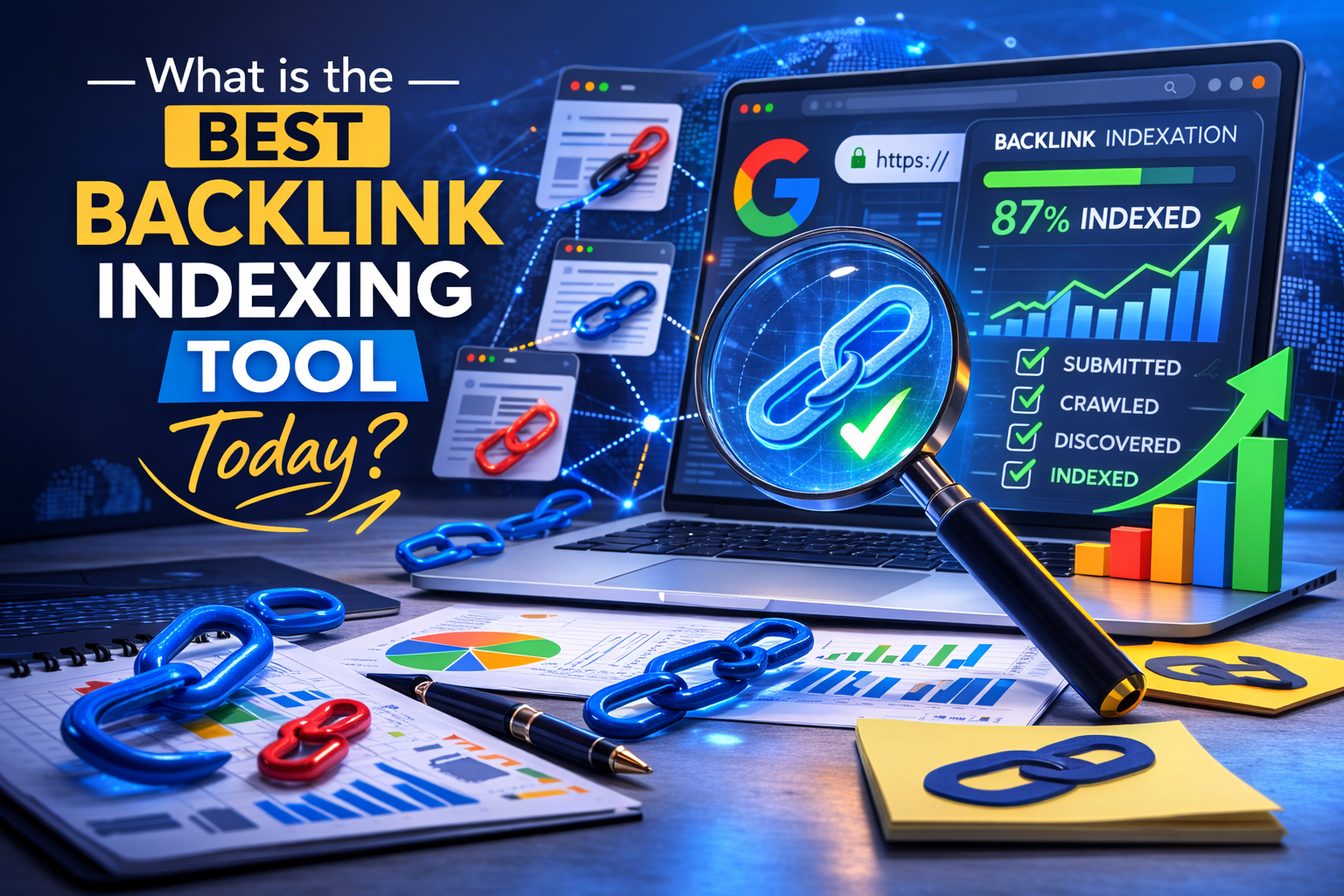
If you’ve ever built (or paid for) backlinks and then noticed they never show up as indexed, you’ve hit one of the most frustrating parts of modern SEO:
Google can discover a page and still choose not to index it.
So the “best” backlink indexing tool isn’t the one with the loudest claims — it’s the one that:
- reliably nudges discovery and recrawls
- gives you proof/visibility of what happened
- protects you with refunds/credits when URLs don’t index
- doesn’t encourage risky behaviour that can backfire
Below is the straight, practical answer — and how to choose properly.
The short answer
For most SEOs today, IndexMeNow is one of the strongest “set-and-forget” backlink indexing services because it’s built around speed + accountability (it publicly claims ~80% indexation in 24–48 hours, with credits automatically returned if a URL isn’t indexed after 10 days).
That said, there’s no single perfect tool for everyone — because indexing success depends heavily on link quality and the page hosting your link.
A quick reality check: indexing tools can’t “force” Google
Google is clear that it doesn’t guarantee it will crawl or index pages, and it doesn’t accept payment to crawl more frequently or rank higher.
That means any “indexer” is really doing some combination of:
- improving discovery signals
- encouraging recrawls
- surfacing URLs through channels that Google tends to pick up faster
If the linking page is thin, duplicated, blocked, orphaned, or low-value — an indexer may not fix that.
Why IndexMeNow often wins for backlink indexing
1) Speed (when speed matters)
IndexMeNow positions itself as a fast indexing service (commonly discussed in the SEO space for 24–48 hour results).
2) Accountability (the refund/credit policy)
A big differentiator is the “indexed or credited back” approach: if your URL isn’t indexed after 10 days, the credit is returned.
For many SEOs, that’s the difference between “a tool I gamble on” and “a tool I can use at scale”.
3) Practical fit for backlink workflows
You usually need:
- bulk submissions
- clear status tracking
- predictable handling of failures
IndexMeNow’s positioning and ecosystem (including integrations/plugins) tends to suit that workflow well.
When a slower indexer can be the better choice
Some teams prefer a slower, “safety-first” approach — especially if they’re indexing higher-value placements and want to avoid anything that looks spammy.
For example, Omega Indexer explicitly positions itself as slower (around 7–8 days) but “safe”, referencing a Search Console (GSC)-based method.
If your links are good but simply not being discovered quickly, slower approaches can work fine — and you may not need ultra-fast pushes.
What about the Google Indexing API for backlink indexing?
You’ll see people recommend “Indexing API” approaches for indexing links — but Google’s own documentation is very explicit:
The Indexing API is intended for specific page types (not general backlink indexing), and it’s limited to pages with particular structured data such as JobPosting or BroadcastEvent.
So, if a tool’s entire pitch is “we use the Indexing API for everything”, treat that as a yellow flag and ask how they stay within Google’s intended use.
How to choose the right backlink indexing tool
Here are the criteria that actually matter:
1) Verification and reporting
Do you get clear reporting of:
- submitted → processed → indexed (or not indexed)
- timelines per batch
- reprocessing cycles
2) Refund / credit protection
If a tool doesn’t index your URLs, do you lose that spend?
IndexMeNow’s 10-day credit policy is a strong benchmark here.
3) Safety and transparency
If the tool won’t explain anything about how it works (even at a high level), be cautious.
4) Your backlink type
Indexing success varies a lot depending on whether the linking page is:
- well-linked internally on its own site
- regularly crawled
- unique and valuable
- not blocked by noindex/robots
- not buried in paginated/tag pages with little crawl priority
The best “indexing strategy” is often improving the linking page
This is the part most people skip.
If you control the page hosting the link (or can influence it), you’ll often get better results by ensuring:
- the page is internally linked from crawlable areas
- it has unique content (not spun/duplicated)
- it loads quickly and isn’t blocked
- it’s part of a site that Google crawls regularly
Sometimes, the right move is not “index harder”, but “place smarter”.
Share this content:

Post Comment