Technical SEO
commercial vs informational intent SEO, Google ranking homepage issues, homepage keyword targeting, homepage not ranking on Google, homepage optimisation guide, homepage ranking problems, homepage SEO strategy, homepage vs landing page SEO, how to rank homepage, improve homepage visibility, intent based SEO strategy, internal linking strategy, internal page SEO strategy, rank homepage on Google, search intent homepage, SEO site structure best practices, should homepage target keywords, site structure for SEO, website architecture SEO, why homepage not ranking
SEO Checker
0 Comments
Why Google Isn’t Ranking Your Homepage (And What To Do Instead)
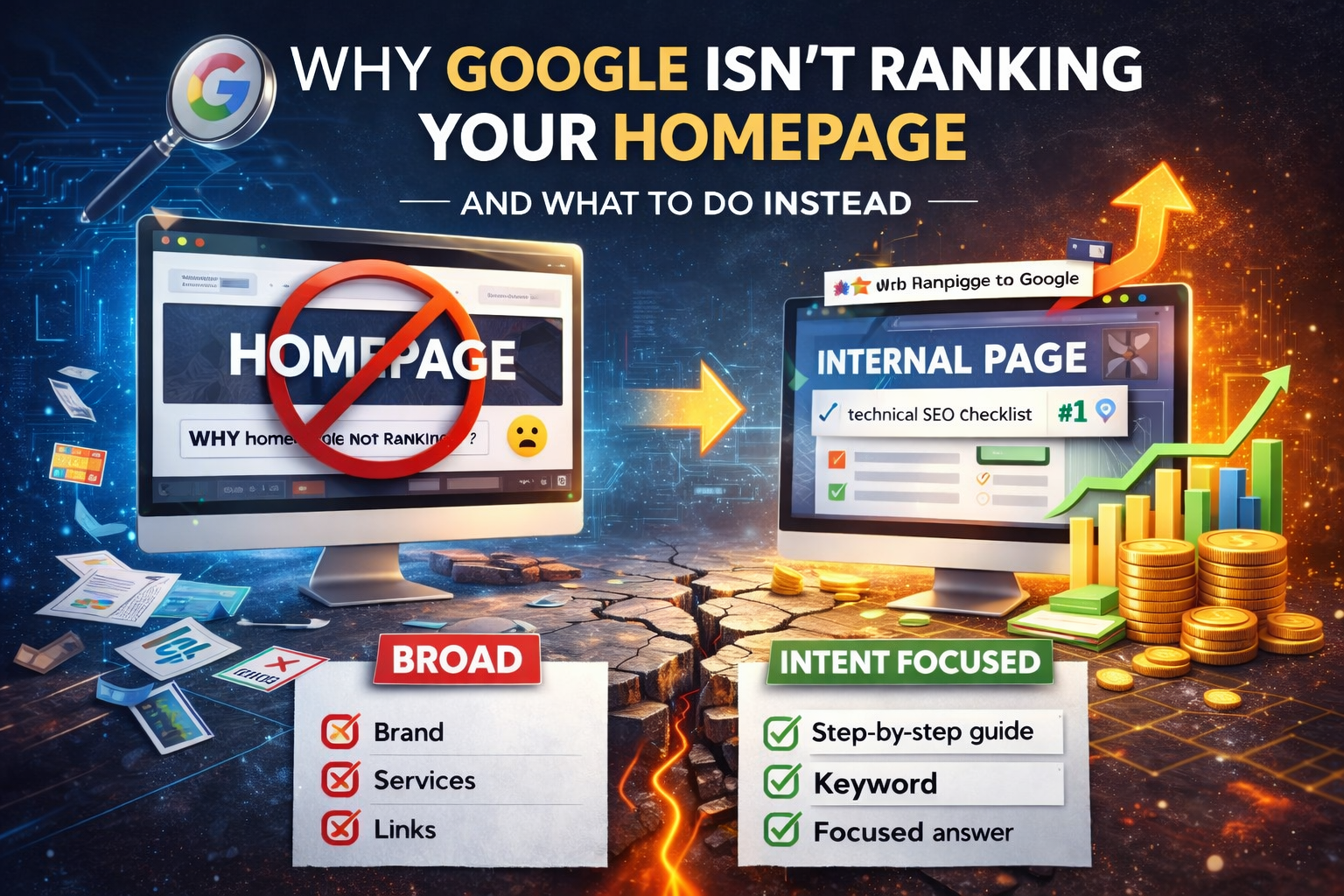
One of the most common SEO frustrations sounds like this:
“Why isn’t my homepage ranking on Google?”
Business owners often assume their homepage should rank for their main keywords.
After all, it’s the most important page on the site.
It has the most links.
It represents the brand.
It’s where they send most traffic.
So why does Google often rank internal pages instead?
And should your homepage even be targeting those keywords in the first place?
Let’s break this down properly.
This article is optimised for:
- why homepage not ranking
- rank homepage on Google
Because in most cases, the real issue isn’t optimisation — it’s strategy.
The Core Misunderstanding: What a Homepage Is Actually For
Your homepage is not a keyword page.
It’s a hub page.
Google treats homepages differently from internal pages because their purpose is different.
A homepage typically:
- Introduces the brand
- Explains core services
- Links to key sections
- Acts as a trust signal
It is rarely the best answer to specific search queries.
When business owners try to force the homepage to rank for everything, they create a structural mismatch.
Homepage vs Intent-Specific Pages
Google ranks pages based on search intent alignment, not importance within your business.
For example:
If someone searches:
“technical SEO audit checklist”
Google wants:
- A focused guide
- Step-by-step information
- Depth on that specific topic
It does not want:
- A general homepage summarising services
Even if your homepage mentions the keyword, it lacks the specificity needed to satisfy the query.
That’s why internal pages often outrank homepages.
Commercial vs Informational Intent
This is where most homepage SEO strategy mistakes happen.
There are two broad intent types:
1. Informational Intent
The user wants knowledge.
Example:
- how to improve page speed
- what is search intent
- why homepage not ranking
Google prefers detailed blog posts or guides for these searches.
2. Commercial / Transactional Intent
The user wants a product or service.
Example:
- SEO audit tool
- SEO consultant London
- website optimisation service
Here, a homepage can rank — but only if it’s tightly aligned with that commercial intent.
Trying to rank a homepage for informational keywords is usually inefficient.
Why Your Homepage Isn’t Ranking
If you’re searching:
why homepage not ranking
The likely causes are strategic, not technical.
Common reasons include:
1. It’s Too Broad
Homepages usually cover multiple services or topics.
Google prefers focused relevance.
2. It Doesn’t Match Specific Intent
The page may not directly answer the query.
It may mention the keyword but not satisfy the searcher.
3. Competitors Have Dedicated Pages
If competitors have full pages dedicated to a keyword and you’re using your homepage, you’ll struggle.
4. Google Understands Your Structure
Google recognises that your internal blog post is a better answer.
So it ranks that instead.
And that’s often correct.
Should Your Homepage Target Keywords?
Yes — but carefully.
Your homepage should typically target:
- Brand name
- Primary commercial term
- Core service category
For example:
Brand + primary service.
Not:
Brand + every keyword variation under the sun.
When people ask:
should homepage target keywords
The answer is:
It should target one core commercial intent, not everything.
The Smarter Internal Page Authority Strategy
Instead of forcing the homepage to rank for all keywords, use this structure:
Homepage
Targets:
- Brand
- Primary commercial service
Links to:
- Service pages
- Blog categories
- High-value resources
Service Pages
Each targets:
- Specific commercial keyword
Example:
- SEO audit tool
- backlink indexing service
- technical SEO checker
Blog Pages
Each targets:
- Informational intent
- Question-based queries
- Long-tail keywords
Example:
- why homepage not ranking
- how to rank homepage on Google
- homepage SEO strategy guide
This structure aligns with how Google interprets intent.
How to Rank Homepage on Google (When You Should)
If you do want to rank your homepage for a specific term, ensure:
1. Clear Commercial Intent
The keyword must match what your homepage offers.
2. Strong Internal Support
Other pages should link back using relevant anchor text.
3. Authority Signals
External backlinks often strengthen homepage ranking potential.
4. Technical Health
Your homepage must be crawlable, fast, and properly structured.
Before optimising aggressively, it’s worth running a full SEO scan to confirm there are no technical barriers affecting visibility.
Structural weaknesses often go unnoticed until traffic scales.
When Google Prefers Internal Pages
Google often prefers internal pages because they:
- Answer one clear question
- Cover one specific topic deeply
- Match search intent precisely
- Avoid mixed messaging
Trying to rank a homepage for informational keywords usually reduces clarity.
Clear pages win.
Proper Site Structure (The Growth Framework)
If you want sustainable rankings:
Step 1
Keep homepage focused and clean.
Step 2
Create dedicated pages for each commercial service.
Step 3
Create blog content targeting specific informational queries.
Step 4
Use internal linking to connect everything logically.
Step 5
Regularly check technical health to ensure crawl efficiency.
This structure makes it easier for Google to:
- Understand your hierarchy
- Interpret topic clusters
- Assign relevance correctly
The Real Goal
The goal isn’t to rank your homepage for everything.
The goal is to rank the right page for the right intent.
Businesses that understand this grow faster because they:
- Stop overloading their homepage
- Build focused internal content
- Strengthen site architecture
- Improve crawl clarity
And when structure improves, rankings usually follow.
Final Thought
If your homepage isn’t ranking, it may not be broken.
It may simply not be the best answer to the query.
Google rewards relevance and clarity over internal importance.
Instead of asking:
“Why isn’t my homepage ranking?”
Ask:
“Is this the right page to rank for this keyword?”
When you align structure with intent, everything becomes easier — and your SEO strategy becomes far more efficient.
Share this content:

Post Comment