Structured Data Not Detected: What It Means, Why It Matters, and How to Fix It
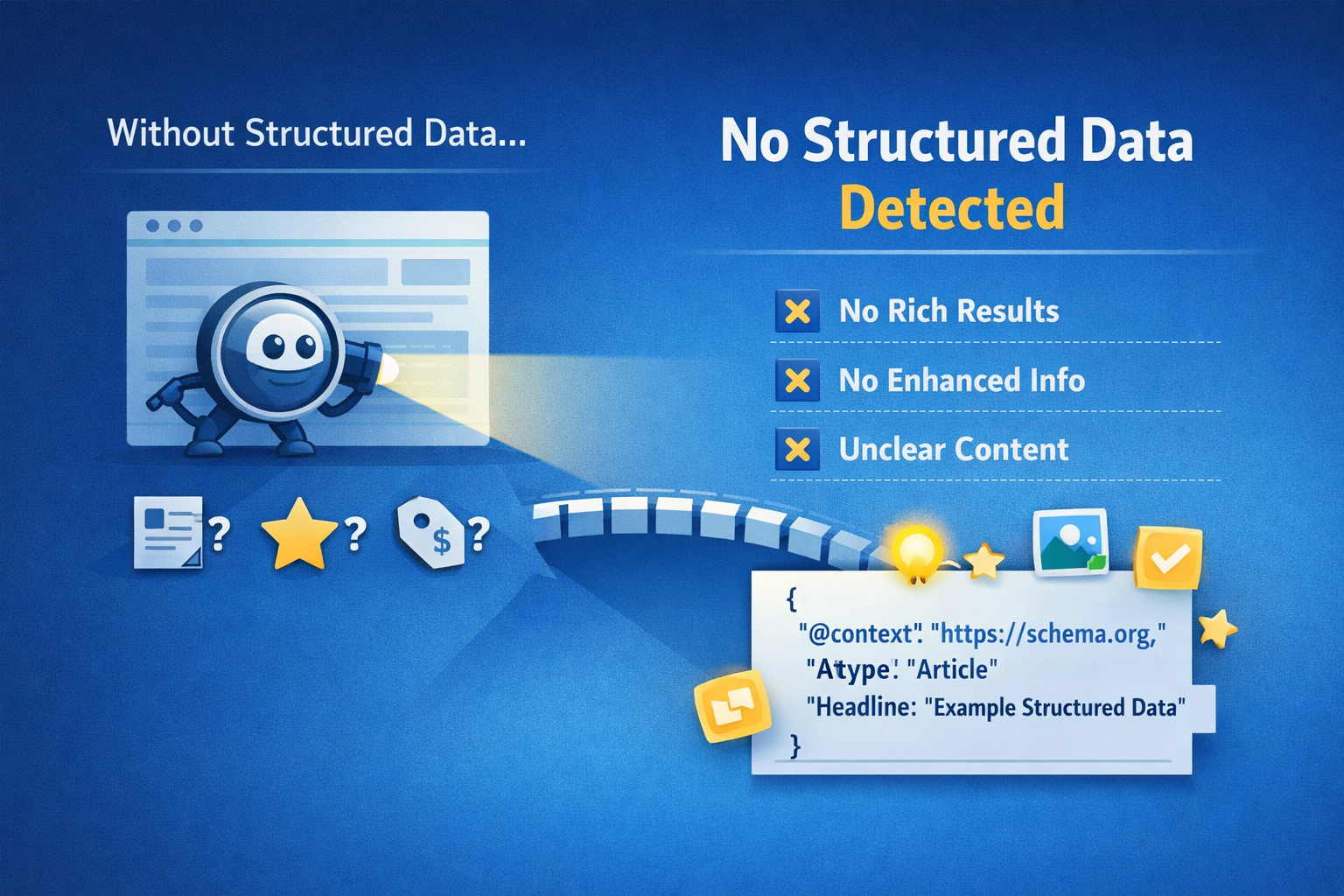
Structured data helps search engines understand what your content actually is, not just what it says. When an audit reports “Structured data not detected”, it means your site is missing a powerful layer of communication with search engines.
This does not usually break indexing — but it limits how your pages appear, how they are interpreted, and how much visibility they can earn.
This article explains what structured data is, why it matters, and how to fix this issue properly.
What is structured data?
Structured data is a standardised way of describing content using machine-readable markup. It tells search engines:
- What type of page this is
- What entities appear on the page
- How different elements relate to each other
Instead of guessing, search engines are explicitly informed.
Most modern structured data is implemented using JSON-LD and is based on the Schema.org vocabulary.
What does “structured data not detected” mean?
It means that:
- No recognised structured data markup was found on the page
- Search engines must infer meaning from raw HTML alone
- The page is not eligible for enhanced search features
This is not a penalty — but it is a missed opportunity.
Why structured data matters for SEO
1. Eligibility for rich results
Structured data enables enhanced search appearances such as:
- Star ratings
- FAQs
- How-to steps
- Breadcrumbs
- Product information
- Event details
Without structured data, these features are not available.
2. Clearer content understanding
Structured data removes ambiguity. It helps search engines distinguish between:
- Articles vs landing pages
- Products vs blog posts
- Organisations vs authors
- Reviews vs testimonials
Clear understanding leads to better matching with relevant queries.
3. Improved click-through rate
Rich results stand out visually. Even without ranking changes, they often attract more clicks than plain text listings.
4. Future-proofing search appearance
Search is evolving towards entity-based understanding. Structured data prepares your site for:
- AI-driven results
- Knowledge-based discovery
- Enhanced SERP layouts
Common reasons structured data is missing
This issue usually happens because:
- The site was built without schema in mind
- The CMS or theme does not add it by default
- Only Open Graph or meta tags were implemented
- Old or invalid markup was removed
- Pages rely solely on visual HTML structure
Many otherwise well-optimised sites simply never added it.
Types of structured data most sites should use
While not every page needs schema, most sites benefit from at least the following:
Organisation or Website schema
Defines who owns the site and what it represents.
Article or BlogPosting schema
Ideal for blog posts, guides, and educational content.
Breadcrumb schema
Helps search engines understand site hierarchy and improves navigation display.
Product schema (if applicable)
Adds price, availability, and review information for products.
FAQ schema (when appropriate)
Can significantly increase SERP real estate when used correctly.
Structured data does NOT guarantee rich results
This is important.
Adding schema:
- Does not guarantee enhanced results
- Does not boost rankings directly
- Does not override quality guidelines
It only makes your pages eligible.
Search engines such as Google still decide whether to show rich results based on quality, relevance, and trust.
How structured data should be implemented
The recommended method is JSON-LD, placed in the <head> or <body> of the page.
Example (Article schema):
<script type="application/ld+json">
{
  "@context": "https://schema.org",
  "@type": "Article",
  "headline": "Structured Data Not Detected: What It Means and How to Fix It",
  "author": {
    "@type": "Organization",
    "name": "SiteAcademy"
  },
  "publisher": {
    "@type": "Organization",
    "name": "SiteAcademy"
  }
}
</script>
This markup is invisible to users but clear to machines.
Common structured data mistakes
❌ Using microdata or RDFa incorrectly
JSON-LD is simpler, cleaner, and less error-prone.
❌ Marking up content that isn’t visible
Structured data must match what users can actually see.
❌ Over-marking everything
Only add schema where it genuinely applies.
❌ Invalid or outdated schema types
Old or unsupported types may be ignored entirely.
How this issue should appear in an SEO audit
When structured data is not detected, an audit should explain:
- ℹ️ No schema markup found
- ℹ️ Page not eligible for rich results
- ℹ️ Search engines rely on inference only
- ✅ Recommended enhancement, not a failure
This is typically an improvement opportunity, not a critical error.
When missing structured data is acceptable
Some pages do not require schema:
- Simple utility pages
- Login or account areas
- Thin confirmation pages
- Internal tools
Public, content-driven pages almost always benefit.
Final thought
Structured data is how modern websites speak clearly to search engines.
If it’s missing, your content may still rank — but it competes without enhancements, without clarity, and without visual advantage.
Adding structured data is not about gaming results.
It’s about removing guesswork.
Share this content:




Post Comment